


https://klimt02.net/jewellers/simeon-shomov
https://klimt02.net/forum/interviews/interview-simeon-shomov-2014


The jewellery created by Maija is characterized by subtle handwork and a delicately intimate message. Maija focuses on the human inner world, where in addition to the highest basic values – love, respect and devotion – there is also willingness, desire and lust. The femininity, intimacy and sophistication contained in the works of art created by Maija Vītola-Zitmane serve as a bridge to the dialogue between the artist’s inner world and the viewer or wearer of jewellery.


The artist works with such materials as animal bones – lamb ribs, camel bone. The artist likes the plastic properties of bone. “Any shape you can imagine can be carved out of the bone. Properly chosen materials often tell you about their future development. ” The artist finds inspiration in the magic of every day, one evening after a meal with friends, a glance was drawn to the lamb ribs left on the plate – natural, laconic shapes stimulated my imagination to find new shapes and create new art objects.


“Creating jewellery is a beautiful, creative and time-consuming process – attentive work, emotions, reflection and satisfaction are a positive result. I want to pass that feeling on, thus inspiring other people. ”


Art gallery PUTTI sends best regards and are very proud of contemporary jewellery artist Maija Vītola – Zitmane (brand “Maija Vītola”) for the received prize from the Latvian Fashion and Style Awards in nomination “Best Contemporary Jewellery Designer of the Year 2019”.
Maija Vītola – Zitmane
maija.viitola@gmail.com
Facebook: MaijaVitolaJewellery
Instagram: maijavitola
https://www.tvnet.lv/7096004/notikusi-latvijas-modes-gada-balvas-pasniegsanas-ceremonija
https://www.apollo.lv/7096106/aizvadita-latvijas-modes-gada-balvas-pasniegsanas-ceremonija
https://jauns.lv/raksts/izklaide/411049-video-atklaj-latvijas-modes-gada-balvu-2020


The event serves a platform for interaction, discussion, and a meeting place for jewellery artists, gallery representatives, collectors, and organizations from around the world. JOYA Barcelona Art Jewellery & Object is designed for professionals as well as the public with a full program of events, exhibitions, conferences. This year the main theme of the event was the communicative and diplomatic role of contemporary jewellery today. The discussion about the power of jewellery is exciting and potentially inexhaustible. It means to return to the beginnings of humanity, where jewellery is not only an ornament of the body but also an ideological expression of culture and, more importantly – POLITICS.
Among the 300 contemporary jewellery artists from around the world who participated in JOYA Barcelona Art Jewellery & Object, Latvia was represented by VALDIS BROŽE, a contemporary jewellery artist who was awarded the AUTOR AWARD presented by Dan Piersinaru – AUTOR’s founder and he personally selects one artist, who will receive the AUTOR Award and represent AUTOR in the next year’s JOYA.
AUTOR is a contemporary jewellery fair in Bucharest, Romania. This is the only event of its kind in South East Europe.

The Grand Prize for Contemporary Jewellery – JOYA – WORTH – was awarded to LILY KANELLOPOULOU from Greece

Each year an artist is selected by the jury for the opportunity to become the face of the next JOYA edition along with the associated media promotion of the artist’s jewellery. The winner joins WORTH project and receives a grant to launch new artistic projects.
JOYA Barcelona Art Jewellery & Object Artistic Director PAULO RIBEIRO
https://benchpeg.com/trends/joya-barcelona-2018-an-interview-with-the-director-paulo-ribeiro


CELINE CHARUAU, France, brooch 2019


Ten contemporary jewellery artists, six memos – lightness, quickness, exactitude, visibility, multiplicity, consistency, twenty jewellery and one book by Italian writer and journalist Italo Calvino “Six memos for the next Millenium” is the foundation of the exhibition “Le Stanze Del Possibile” created by curator NICHKA MAROBIN.
How do we define contemporary jewellery as “light”? How can we detect movement through the structures and techniques of contemporary jewellery? How the inner rhythm of a jewellery can be achieved and detected by the wearer and by the viewer? Each work is not a mere work for itself, it encompresses values, ideas and languages, conveying messages that can initiate fundamental change on a global scale. How does the “self” described by Italo Calvino place itself in the world? What about the particular “self” in the field of contemporary jewellery?
The exhibition is displayed in Hannah Gallery, Barcelona. https://hannahgallerybarcelona.net/


Exhibition NUDA VITA 
Exhibition LOVE HURTS THREE TIMES 
Contemporary jewellery artist GIGI MARIANI, Italy 
Contemporary jewellery artist NICOLAS ESTRADA, Spain 

Art gallery Putti director AGITA PUTĀNE 
Exhibition Jewelry Links in Barcelona, laikmetīfie rotu mākslinieki no Turcijas 
JOYA 
Friends 
AUTOR AWARD 
JOYA 
Latvian contemporary jewellery artist VALDIS BROŽE 

Latvian contemporary jewellery artist VALDIS BROŽE and Art gallery Putti director AGITA PUTĀNE
ANNAMARIA ZANELLA

ANNAMARIA ZANELLA exhibition
“TRA MATERIA E COLORE / BETWEEN MATERIAL AND COLOUR”
was on display at the San Rocco Oratorio in Padua, Italy.
Contemporary jewellery by the artist and 16th-century murals that depict the life of San Rocco complement each other wonderfully.

The most complex aspect of setting up an exhibition based on Annamaria Zanella priceless work, has indeed been, the selection of some pieces of art and to pinpointing them to a satisfying exhibiting criteria. Hence, i did not wanted to do a classical anthology by presenting the works in a strict, both cronological and typological order, but i , otherwise preferred to give strength to Forms, to Matters and above all, to Colours, by creating some sort of rooms, rooms filled with thoughts, in which a subtle thematic, binds together the pieces of art , blending well either, the chromatic and the formal aspect and by the fact of communicating with one another too.


Born in Padua, Italy, in 1966, Annemaria Zanella began her personal and artistic work at the Selvatico Institute of Fine Arts in Padua in 1987.
The idea of jewellery came as a necessity for communication with the outside world – my jewellery reflects the events of my life.

Silver, copper, niello, gold, pigment, resin
I capture the highlights, just as photographers do. My emotions, thoughts and experiences have crystallized in the jewellery I create.
Emotions come from the people I meet, the trips I take, the things I read in the newspaper or books… everything transforms into the shapes and colors of my artwork.

Silver, niello, lens, plastic fabric (a piece from artist Christo and Jeanne-Cloude’s floating piers), gold, acrylic
https://christojeanneclaude.net/projects/the-floating-piers
Annamaria Zanella in the art world is called the jewel. Each work in the exhibition is like an artist’s personal life page, where the artist’s creativity is exhibited using materials such as iron, plastic, glass, burnt wood, various pigments and oxides.

Aluminium, gold, silver, ruby, glass sand, enamel, acrylic

Aluminium, gold, silver, enamel
She also uses “precious metals” and “precious stones”. Iron that looks like gold, paper that looks like lazurite, aluminum that looks like a sea sponge, broken pieces of glass that have the same light and brilliance as gemstones.

Aluminium, glass, sand, silver, gold, magnets, resin

Silver, gold, enamel, niello, amber
It is hard to explain how my jewellery comes into from, in sublimation to the environment – sometimes it comes to me in complete emptiness when I drive home in the countryside, I suddenly see Andrea Palladium (1508 – 1580) villa, old wooden door, rain-washed and wind-blown advertising posters, or colorful fruit baskets on the Padua market.

Silver, enamel, gold
The development of the idea of an artwork is a long internal process that is reflects suddenly – in complete silence, my thoughts and feelings and everything in my head just comes into shape. I sketch, draw, write things down on various pieces of paper that sometimes look like chaos, but it is from these thoughts that the collection comes.

Plastic tube, lapis lazuli powder, resin, gold, acrylic
Colors are emotions. I cannot imagine jewellery without colors, without enamel, without pigment. The color of the metal itself is cold, but oxidized iron creates a wonderful unity and color scheme. I love the color of rust, and I find the blue color transcendental. I made the ultramarine blue pigment according to recipes from the 14th century; very finely crushed in porcelain mortar while adding natural binders (egg yolk, honey). This is a kind of combined alchemy between modern materials (steel cloth, titanium, iron) and a mineral that resembles the depths of the sky and the sea.

Papier–mâché, gold, resin, lapis lazuli powder

Corkwood, lapis lazuli powder, acrylic, iron, gold, silver

Silver, PVC, acrylic, magnets

Silver, gold, Plexiglas, enamel, sand, resin
The artist’s jewellery cannot be counted as representing the classic adornment theory – aesthetics that is not smoothly polished 2X2.
Some of the artworks are provocative, some are beautiful, and some give tremendous energy. Their main job is not to decorate the body – the artist invites you to go deeper and create a dialogue / communication, both between the wearer and the artwork, and the wearer and the viewer.

Titanium, wood, lapis pigments
Annemaria Zanella graduated from the Istituto Statale d’Arte Pietro Selvatico in the metal and jewellery department. She studied sculpture at the Fachhochschule für Gestaltung in Hochschule Pforzheim and at the Venice Academy of Art.
The artist’s work has been featured in prestigious international art collections in the United States and has been exhibited at various international exhibitions around the world.


Agita
]]>“My daily horizon is with wineyards covered hill in the Val Tidone valley – red, clayey ground and chalky veins of the Po River in the Piacenza province, the Emilia – Romagna region of Northern Italy. It is a source of inspiration for creative work.”

For the first round of the competition 120 artists applied from all over the world. 50 works that was selected by the jury made the basis of the exhibition and also participated in the competition for the first place. It is a real “fermentation” in the world of jewellery art. The exhibition opening was on May 12 in the villa Braghieri Albesani, in city Castel San Giovanni, Piacenza, Italy.

Villa Braghieti Albesani was built in the 17th century, Baroque style. In 1809, the villa became property of the Criminal Court of Piacenza – Pietro Albesani. In 1905, the villa was bought by the Braghieri family. Carlo Braghieri, a prominent lawyer, willed the property to the municipal authority of Castel San Giovanni in 1971. At the moment the Braghieri villa is a museum and a library.
The source of inspiration for the project comes from the process that is rooted in the wine-making culture. As a metaphor for the fermentation process in wine, when a healthy, living element of nature – grapes turn into another form wine, with another taste, character and value. In the same way, it makes you think about the process of creating contemporary jewellery – turning different materials into a special design, shape and concept – jewellery. Winemakers and jewellery artists use their creativity in order to express themselves and show it in ready-made product.


GIGI MARIANI (Modena)

1st row from right : Renzo Pasquale – jury member, Italian jewellery artist and teacher in Padua

Jury member : Julia Wild – Trier University of Applied Sciences, lecturer at the Faculty of Design 
FERMENTO team member : Sandra Moroni

C2H5OH – winner of Art Gallery PUTTI Award


MARIANTONIETTA DAVOLI, Italy
C2H5OH
Necklace
Materials: gros-grain ribbon, waxed cotton cord, polyester
I clicked wine, fermentation… And I found myself immersed in chemical formulas. I immediately transformed the chemical formula of ethyl alcohol into a three-dimensional model made of textile and cords. I started duplicating the formula into a composition that forms a necklace. My proposal for the ingredients of equality for this project are: the concept, manual skills, constructive technique, color composition, additions of small elements, balance
1st place winner – SHAPE OF THE MOMENT

YASUKO KANNO, Japan
SHAPE OF THE MOMENT
Brooch
Materials : silver, steel
The appearance is momentary and changes constantly. It’s a temporary and partial reflection of the real entity and the object will never show the same look again. It is frail, ephemeral and imperfect, giving an impression that it could break easily under pressure. However, the momentarily appearance provides hints to approach the object, which allows us not only to know the outer form but also to feel and appreciate the inner truth, richness and satisfaction.

CORRADO DE MEO, Italy
TERROIR
Brooch
Materials : silver, wood, papier maché, acrylic, paint, oxides, nitro colour
Terroir factor – a combination of things that give wine it’s unique taste, aroma and colour – climate, vineyard location, soil.


ELISABETTA CAROZZI, Italy
TASTING NECKLACE
Necklace
Materials : borosilicate glass, silicone plugs, nylon mesh

NATAŠA GRANDOVEC, Slovenia
AUTUMN
Brooch
Materials : silver, gold 22 ct

SARA SHAHAK, Izraēla
SOMETIMES PURPLE
Brooch
Materials : iron, enamel, lacquer, rubber paint, velvet powder, glass paint, miniature glass balls, stainless steel

OBLID MLAKAR, Switzerland / Slovenia
THE CROWN
Tiara
Materials : sterling silver, eucalyptus, seedpods, textile, silk thread
A legend has it, that you can find gold and silver on the leaves of eucalyptus. The truth is, the tree does exact precious metals from the soil, and then releases them through the leaves and the seedpods. In this interpretation of the legend, the eucalyptus crown continues the story with the pods drinking from their silver base. Those who have tasted their offerings understand the real beauty of the crown is in the individual imperfection of its “jewels”.

BARBARA UDERZO, Italy
BLOB RING RUBEDO 2019
Ring
Materials : black rhodium silver, various plastics, plastic vampire character with fluorescent teeth (objects trouvés), glass bottle with red liquid, transparent and red glass, transparent yellow glass, token, miniatures, crystal, glass.

ARIEL LAVIAN, Israel
COPPERTATION
Necklace
Materials : copper
If you happen to be at Val Tidones region, I recommend visiting the 13th century medieval little ancient village, where sweet, fantastic and tasty restaurant is – Oeangerie Cucina d’Arte, Strada Grintorto, 3 – Grintorto di Agazzano


I am very grateful for the invitation to participate in the jury, to take part in the event and to meet close and lovely people.

Agita
]]>Riga art checklist for Oldtown
I work in the gallery and one of my integral pleasures of life is art and culture. It brings me the knowledge, strength and full attitude of love to life. I would like to offer you my favourite art route in the Old Town, which I walk through to see, get to know and find out about the latest in the field of Latvian culture.
Riga’s oldtown is the historical and geographic centre of Riga that in itself is architectural artwork – thus it has been named by UNESCO as world heritage site.
To the list – it has been put in such an order to make sure you don’t go in circles, but some small detours to see some more magnificent buildings in Riga Old town.. On the way you’ll be able to enjoy art, see and visit small & exquisite boutiques, works of local craftsmen, small cafes and street vendors.
This is the ultimate contemporary art guide of our oldtown for arts connoisseur.
Stop 1: Art Gallery PUTTI
Established in 2000 and initially working to promote Latvian contemporary jewellery artists, it has grown into working with internationally recognized artists and projects of contemporary and conceptual jewellery, but making sure that this border is crossed once in a while. Dedicated exhibitions and projects are created 4-5 times a year and the pieces can not only be viewed (photos are encouraged), but also tried on and purchased.
Address: Peitavas iela 5-31, Vecrīga

Stop 2: Art gallery BASTEJS
Small, but gorgeous gallery hidden away on one of the smaller streets of oldtown – Alksnāja street. This is home of personal and group exhibitions of Baltic artists. Gallery also represents some of the Latvia’s most excellent artists.
Address: Alksnāja iela 7, Vecrīga

Next, take Vecpilsētas iela (iela = street) which takes you back centuries.

I would also like to mention a fantastic burger cafe on Vecpilsētas iela – STREET BURGER. For me it’s the most delicious burger in Riga. The burgers are made from local beef and lamb. Personally I love the fact you can enjoy the burgers not with bread, but with lettuce. DELICIOUS!!! It should be noted that the interior has retained the ancient interior structures, which, combined with contemporary, together create a very cozy atmosphere.
Address. : Vecpilsētas Street 8A, Old Town
vecriga@streetburgers.lv

Going down the Vecpilsētas iela you’ll reach Grēcinieku iela, which is one of the main old town’s arteries – here take a left and walk straight until you reach Fashion museum
Stop 3: Fashion museum
Museum itself has found its home in building that was built in 14th century that is an excellent backdrop for museum’s exhibits.
Museum always has an periodical exhibition that is dedicated to specific time or epoch + the main exhibition that is dedicated to overall history of fashion. It is not all about clothing though – footwear and accessories are plenty.
This museum makes good use of technology by augmenting the pieces displayed with audio and visual materials.
After the visit you might want to enjoy a cake and a coffee (they have specialty roasts) in museum’s café that is decorated in “Art Deco” style. Good place to reflect on what you have seen so far.
Address: Grēcinieku iela 24-1, Vecrīga
http://www.fashionmuseumriga.lv/

Stop 5: Rīgas mākslas telpa
Rīgas mākslas telpa translates directly as “Riga Art Space” and that is what encapsulates its essence.
To enter this modern art space that hosts various exhibitions you have to find the doors and go underground.
This museum (if it actually can be called museum) doesn’t have any permanent exhibitions, so they organise a lot of contemporary exhibitions, dance performances, concerts etc.
If something happens here while you’re in Riga, it’s usually a safe bet that it’s worth seeing.
Address: Kungu iela 3, Vecrīga

Stop 6: Museum of Decorative Arts and Design
(part of Latvian National Museum of Art)
Museum’s building used to be a church, built in 13th century. It’s the oldest stone wall building in use in Riga.
Museum prides itself on its very own 7 collections that include ceramics, metal art, leather art, decorative wood art, glass art and design collection.
It has its permanent collection, but also curates local and international themed exhibitions.
It’s location is right next to St. Peter’s church, which is the tallest church in Riga and has been mentioned in writings in year 1209. It has an elevator that you can use to get a view of Riga from above.
Address: Skārņu iela 10, Vecrīga
Stop 7: Art Museum RIGA BOURSE
(part of Latvian National Museum of Art)
In the mid-19th century the first product exchanges spawned in Riga and in 1856 this beautiful building was built.
Museum’s collection comes from former Riga city elders, merchants and burgomasters that mainly date back to the end of the 18th century and especially the 19th century. It has also has relied on other museum collections to create its own.
Museum has 4 permanent exhibitions, but Agita says she prefers the themed exhibitions which usually take place on the first floor which sometimes hosts concerts and even theatre plays.
Address: Doma laukums 6, Vecrīga

Stop 8 (the last one): ARSENĀLS Exhibition Hall
(also part of Latvian National Museum of Art)
One of the biggest art spaces in Riga as well as architectural monument – a customs warehouse or arsenal built at the beginning of the 19th century in the late Russian Classicism style, which was adapted for museum use in the second half of the 1980s.
This museum is the keeper of the national museum’s
collection that covers the time from 20th century’s second half to
present day. ARSENĀLS hosts conceptual art exhibitions and personal exhibitions
of both Latvian and international artists.
Agita: “Must visit for contemporary art admirer in Riga.”
Address: Torņa iela 1, Vecrīga

Download the route or print the map here:https://goo.gl/maps/NRsxxFoqK4fK6z436

Agita
]]>Brooch author: Reka Lorincz
Arriving at Munich strong wind and rain greets us. It is a bit mood killer, because running from one exhibition to other isn’t so enjoyable in this kind of weather. But it’s not worth being angry with things you can’t change.
I have decided to visit 30 exhibitions in 2 days and I have three goals:
- Find artists whose works fit into my gallery and projects
- See great exhibitions (artworks, scenography, atmosphere)
- Meet friends (artists, gallerists), in evening go to restaurant with them and chatter about this and that.
SCHMUCK 2019
I decided to start with a visit to the MESSE MUNCHEN, where The SCHMUCK 2019 exhibition can be seen. I already had decided to report on this exhibition. I wanted to put the report on all social networks so that the public that continues to be conservative in their views, ideals and lifestyle habits could meet the contemporary jewellery challenge of SCHMUCK 2019 and the relevant contemporary galleries in the world.
I bought the ticket and went to the exhibition in good mood, began to explore, took the phone out of my purse to take pictures when two “carberi” came up to me and said I couldn’t take pictures. It was like a bolt from the blue! For a short time, it seemed that I had entered the 20th century or the Soviet times, when nothing could be done. It makes me wonder about the role of SCHMUCK in the contemporary jewellery field, in an era where technological status symbols – iphone, ipad, gadgets – have occupied quite a large area.
What’s the meaning of SCHMUCK then, if only artists, who know each other well, working in the field of jewellery are familiar with this event? Beyond the boundaries of the marked area, a narrow group of admirers know about this event. This conditional “living in its own bubble” has long been one of the biggest problems in the niche. I really do not understand why such an event is necessary if it says nothing to my gallery visitors, jewellery buyers.
However, I did not dare to shake off, so I looked at the exhibition and went to see what other galleries had exhibited.
The Gallery PLATINA (Stockholm, Sweden) did not disappoint. The gallery’s collection was great because the gallery’s collection works always hang on the border until which jewellery can retreat from previous stereotypes and can still classify as a jewellery. Great atmosphere.

PLATINA 
ARTEMIS VALSAMAKI
I would also like to mention the exhibition – JOYA, where Paulo Ribeiro was holding great fervor. I liked the attractive design and collection of the exhibition.
www.joyabarcelona.com


PAULO RIBEIRO
Next I went to the city center to continue the most important part of the journey – MJW.
I’ll stick to the saying that “one needs to watch what likes and less criticize something that does not like”. So I’ll mark those exhibitions I just liked, provoked by dialogue and dressed up with some sort of delusion.
1.“ POPEYE LOVES OLIVE”


ERATO KOULOUBI 
ARTEMIS VALSAMAKI
2. NUDA VITA THE PRACTICE OF COLLECTIVE AND POLITICAL BODY


DANIEL RAMOS OBREGON, COLOMBIA BROOCH, curvewood, natural hair, 950 silver
This could be called – JEWELLERY of 2019.
Gallerist Olga Temnikova is one of the founders of the Tallinn’s art gallery “Temnikova & Kasela”. After a visit to the President of Estonia, the internet literally exploded into a discussions about her necklace. The author of the jewellery is Tanel Veenre. This piece of jewellery of MJW was in status of Mona Lisa, just a pity it was exposed by simply putting it on the windowsill.
https://elu24.postimees.ee/4030505/ei-olegi-dildo-olga-temnikova-kaelaehteks-on-hoopis

3. OVERREACTING & “ LAND MARKS”
Jewellery Speaks Feminism and Gender
I am unable to enter the topicality of the Feminism movement today, but this exhibition addressed me very much. Both the design of the exhibition and the works and the young, attractive artists and the atmosphere in it were somewhat of hooligan impulses, but at the same time as a bridge between the intimate inner world and public space.


YOTAM BAHAT, “WILL BE A DADDY”

KATIA RABEY, “FEMALE MASTURMATION” 
RILL GREENFIELD, “BOOBISM”
4. “ IODEOMATIC – JEWELLERY CONVERSATION BETWEEN FRANCE AND GERMANY’
I got a feeling that art only lives for art. An artist from France tells something very smart to an artist from Germany. As a viewer running long down the streets of Munich, frozen and dripping, there is no positive contribution from this communication. Works on the 1st floor exhibition were interesting.

PIA GROH 
5. “ CLEAR CURVES “
– students from the Applied Art and Design Department, University of Applied Sciences Dusseldorf
I wanted to highlight the arrangement of the exhibition, because the room, design details, texts must be in perfect interaction with the jewellery, because it affects our feelings.


BERU INOU 
KONSTANZE PRECHTL
6. “ TRAP”
An exhibition where the artists highlighted one of the top tasks of the contemporary jewellery – to highlight the carrier of the jewellery.


FUMUKI TAGUCHI 
7. “ INFLUENCES”
We all know the feeling when you enter the exhibition and the artwork speaks to you. And the feeling is wonderful. All the works addressed me at this exhibition. And at such moments I get the feeling that I want these works to belong to me.


CORRADO DE MEO

MARIA ROSA FRANZIN 


GIGI MARIANI
8. ALEXANDER BLANK
Everyone was kindly invited to this room! The purity of the thought, the purity of the ornamental language are the values that we aspire to, which we remember when nothing surprises.


9. “FABRICATE”
-students of the Central Saint Martins BA Jewellery Design course
As every year, these exhibitions have never failed me. They are like a dot on i. These students’ jewellery are excellent self-expression tools, complementary to their “self”. I happened to go there at the moment of the exhibition opening, there was a big crowd, but everything I saw, heard and felt there, I just couldn’t stop enjoying. The jewellery was like a communication platform, a visual language tool and an endless fantasy incarnation – conditional practicality and commercial aspects were shifted to the second plan for a moment.
https://klimt02.net/events/exhibitions/fabricate-vitsoe

LEIA LEE LE ER, “CATCH OF THE DAY” 
MARIA MILITSI, “BULLDOG CLIP”

JOARLA CARIDAD, “LOVE NOT PORN BROOCH” 

EVE LAM, “LOOK AT ME, ONCE MORE” 
EVE LAM


Agita
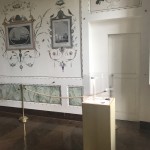
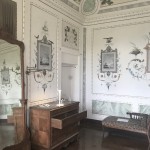
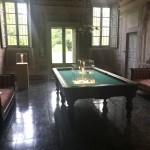
]]>Villa Braghieri-Albesani was begun during the late 17th century and construction continued till the end of the 18th century. In 1809, the villa became property of the president of the Criminal Court of Piacenza – Pietro Albesani. The villa was bought by the Braghieri family in year of 1905. Carlo Braghieri, a prominent lawyer, willed the property to the Ente Comunale di Assistenza of Castel San Giovanni in 1971. Since 1996 Villa Braghieri-Albesani is a property of the commune and right now it is a museum and library.
The project has been running since 2011 and the participants are well-known and established artists from all over the world and growing artists – students. They represent the real “fermentation” in the world of art – turmoil, discussion, emotion.
Inspiration for this project is the source of roots in making culture and its related to wine. It’s interpreted and analysed by jewellery artists in their artworks. There are four main requirements in this competition: the coherence with a concept, the research on materials, the type of artistic expression and the quality of techniques. Every year artworks are being rated by the people who is professionals from the experience that they gained in their lifetime.
Eliana Negroni is the founder and curator of the project Gioielli in Fermento. She was born in Milan, graduated from Milan University and is engaged in industrial design. She has also completed Sommelier courses. She is a member of AGC, the Italian Association for contemporary jewelry.
The jury of the 2018 edition-
Roberta Bernabei (Loughborough University UK, contemporary jewellery teacher, researcher and essayist), Petra Hölscher (senior curator Die Neue Sammlung München Design Museum, Monaco di Baviera), Angela Madesani (Accademia di Belle Arti di Brera, Milano e IED Istituto Europeo di Design, Milano, Italy, professor, art historian, contemporary art and photography curator and essayist), Maria Rosa Franzin (AGC Association board chairperson), Nichka Marobin (The Morning Bark founder, art historian and collector), Giò Carbone (LAO Jewellery School Firenze founder and director);
Board of advisors –
Roberta Bernabei (Loughborough University UK), Leo Caballero (Hannah Gallery, Barcelona, Spain), Charon Kransen (Charon Kransen Arts, New York, United States of America), Gigi Mariani (goldsmith artist, art jeweller, Modena, Italy), GianCarlo Montebello (BOMontebello, Milano, Italy), Paulo Ribeiro (Joya Art Jewellery and Object, Barcelona, Spain).
From September 7, 2018 until September 21, 2018 Art gallery PUTTI is hosting art exhibition dedicated to contemporary jewelry and wine – “Gioielli In Fermento: UN BEL PANORAMA”
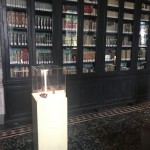
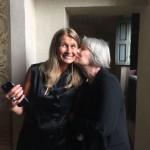
– SCHMUCK 2018 – historical jewellery exhibition taking place since 1959 in Kunsthalle exhibition hall
– TALANTE – international new talent competition in jewellery design and technologies
– various events around the city
In this week jewellers, collectors, students, gallery representatives, professors, and other jewellery enthusiasts met and got to know each other.
Throughout the week in various locations all around Munich jewellery exhibitions, discussions, book presentations, performances and closing events took place; in total around 100 events.
Here is a small insight on the SCHMUCK 2018 events:
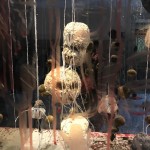
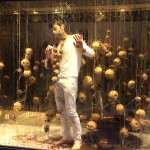
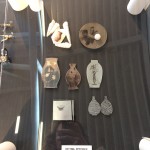
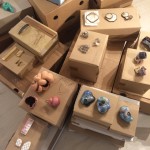

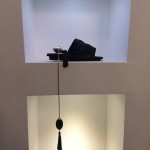
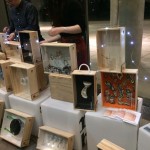
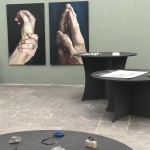
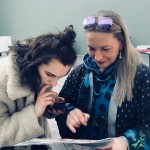
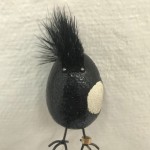
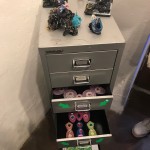

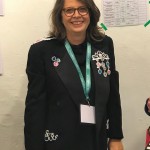
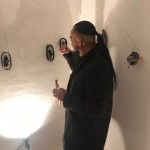

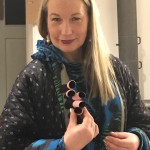
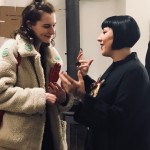
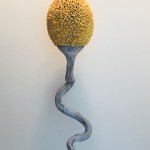
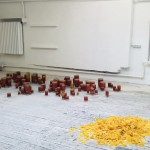
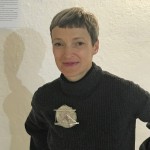
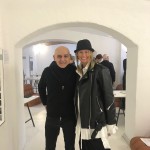
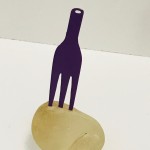
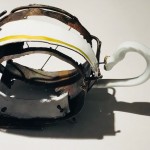
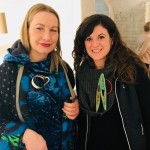
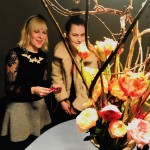
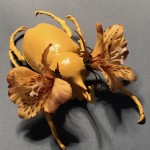
We would like to highlight the best experiences we had (keep in mind that we saw only a part of all the events):
- “The Meet” was a very interesting and engaging symposium organized by Art Jewelry Forum. We especially loved the first part where a panel of collectors discussed how curators select works for exhibitions, and how do museums decide to acquire them. The panel consisted of Susan Cummins, David Bielander, Liesbeth den Besten, and Petra Hölscher, the discussion was led by Benjamin Lignel. The discussion touched upon a few very interesting topics and we would love to hear a more elaborate opinions sometime in the future.
- “Shelf life” displayed works by work by 33 makers, staff and students of Central Saint Martins, BA Jewellery Design course. There were some really special and interesting pieces. We loved an unusual take on jewellery, in form of video by Stacey Huang.
- David Bielander was our favourite amongst all of the presentation we saw and visited during Munich Jewellery Week. His exhibition “Cashboards” was something truly special. The idea and ability that it takes to create jewellery from gold in a way that it looks like an effortless project made by light cardboard – this fascinated us.
- “(IM)PRINT” presented works that addressed different interpretations of the acts of publishing. These works displayed different takes on the connection between the languages of jewellery typography, editing, producing. We saw some interesting perspectives on how humans perceive date and information they see.
- The ladies from The Dialogue Collective did not disappoint with “The Royal Appointment”, as always. They simply have the ability to create an amazing atmosphere where the work is presented in a very beautiful and also engaging way. The importance of this cannot be stressed enough. They make sure that the visitors have the ability to discuss the theme of the presentation and each piece with its maker, simultaneously creating the feeling that nothing should be taken too seriously and the most important thing is to enjoy ourselves.
- “American Gothic” established a display that lived up to its name – it had some truly American (beer pong!) and truly gothic elements. The display was a great back ground to the varied pieces that had some fresh ideas.
- David Clarke and Bettina Speckner surprised us with the beauty and depth that we saw in the works as well as the presentation in the wonderful Galerie Christian Pixis. Speckner`s jewellery has such intricate details, polished to perfection. Each piece tells its own magical story. The works were presented on old, antique furniture pieces which helped to communicate the pieces excellently.
- “Everyday Epics” in Kunstpavillon had gathered great artists with wonderful pieces. Again, we were struck by a different form of communicating the jewellery – this time it was an art work by Jing He – a photo of “Potential pin”. The trip made us think and discuss a lot about the boarders of jewellery where it meets different art forms.
- “The Box” was a very interesting project that we were impatient to see. The creators sent the artists a box of selected objects – CDs, erasers, towels and envelopes. It was so interesting to see how the jewellery designers have tackled this task. We especially loved the works by Reka Lorincz, we are always surprised and amused by her ideas. This time she collaborated with her favourite artists from other fields of art, and the result was wonderful.
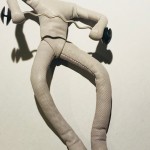
The work on this animation film is the inspiration behind the upcoming solo exhibition of Valdis Brože in Art gallery Putti – “White Pate”. It will be on display from November 6 until November 24, 2015. The animation film “It`s about time” tells a story about time, and the fact that it cannot be stopped. The main character is a man who is made of silver and mammoth bone. Time goes by and the old man has decided to leave the room he lives in, which is full of memories about the things he experienced once. When working on this project, the artist had new ideas, he had an urge to develop them and bring in new stories, which would be told through his jewellery.
Lielais Kristaps National Film Festival is a Latvian film festival. It is the highest prize awarded in the Latvian cinema.
